
Claude AI Agents: What They Are, How They Work, and How to Build Real Agent Systems
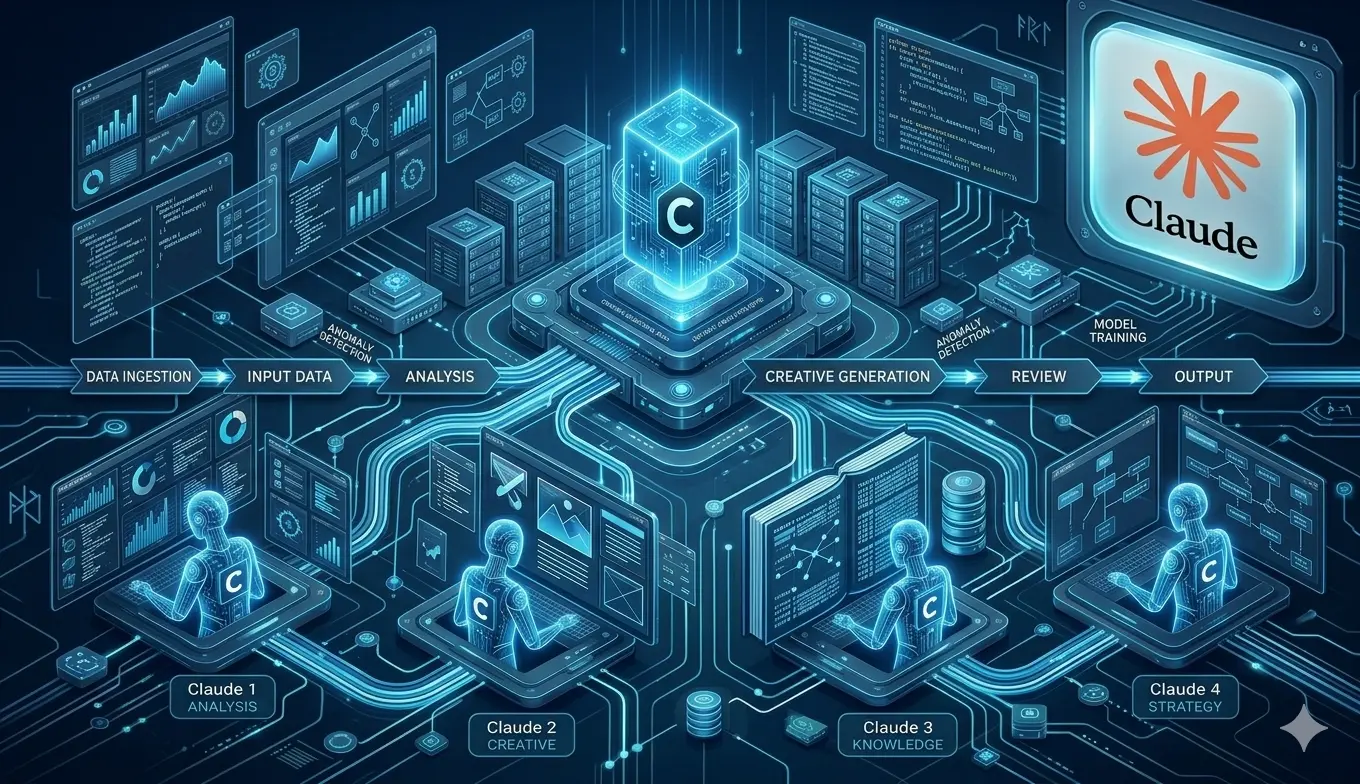
Claude AI agents are becoming one of the most important building blocks in modern AI workflows. But most people still misunderstand what an agent actually is, how Claude skills fit into the picture, and what separates a toy demo from a real working system.
This guide explains what Claude AI agents are, how they work, where most people get them wrong, and how to build real agent systems that are actually useful.
Why Claude AI Agents Matter Right Now
Most people use AI like a smarter chatbot. They ask a question, get an answer, and move on.
That works for simple tasks, but it breaks down quickly when the work becomes larger, more repetitive, or more structured. This is where agents become useful.
Instead of handling one isolated prompt at a time, an agent can operate inside a workflow. It can follow instructions, use tools, handle a specific role, and work as part of a larger system.
That is the real shift: AI stops being just a conversation tool and starts becoming part of execution.
Where Most People Get AI Agents Wrong
Most people do not fail because the technology is weak. They fail because their setup is weak.
- They treat agents like magic instead of systems
- They overload one agent with too many responsibilities
- They confuse prompts with workflows
- They use tools without clear task boundaries
- They expect good output from poor instructions and messy context
These are not AI problems. They are design problems.
The System in One Sentence
A real Claude agent system splits work into clear roles, gives each role the right context and tools, and connects those roles into a workflow that produces a useful outcome.
What a Claude AI Agent Actually Is
A Claude AI agent is best understood as a task-oriented AI worker inside a structured workflow.
Instead of asking Claude to do everything in one giant conversation, you define a job more clearly:
- what the agent is responsible for
- what instructions it should follow
- what context it can use
- what tools or files it can access
- what output it is expected to produce
That structure makes the output more reliable and more scalable.
How Claude Skills Fit Into the System
Claude skills help reduce repetition and improve consistency.
A skill is essentially a reusable instruction layer. Instead of rewriting the same logic every time, you define a pattern once and reuse it when needed.
For example, a skill could define:
- how to summarize a transcript
- how to convert a workflow into an article
- how to analyze a file or extract structured information
- how to follow a specific brand voice or formatting standard
Skills matter because real systems break when every task starts from zero.
What Makes an Agent Different From a Normal Prompt
A normal prompt asks for one answer.
An agent setup defines a role inside a process.
That difference matters.
A normal prompt might say:
- “Summarize this transcript”
An agent-based system is more likely to say:
- Agent 1 extracts the backbone of the workflow
- Agent 2 turns that into a structured HTML article
- Agent 3 creates title, slug, image prompts, and internal links
Now you are no longer prompting randomly. You are running a system.
How Claude Agent Systems Actually Work
The practical structure usually looks like this:
Step 1: Start with one clear task
Every useful agent system starts with a narrow responsibility. If the role is vague, the output will be vague.
Good examples:
- extract the real workflow from a chaotic transcript
- turn that workflow into a practical article
- review an output for missing steps or weak structure
Step 2: Give the agent clean context
Agents perform better when the context is limited and relevant. Dumping everything into one giant context window usually makes results worse, not better.
The agent should get:
- the specific input it needs
- the rules it should follow
- the expected output format
Step 3: Define the output clearly
Most weak AI workflows fail here. The task may be fine, but the output is too loosely defined.
A strong setup specifies:
- format
- structure
- what must be included
- what must be excluded
Step 4: Split complex work into roles
If a task contains multiple different kinds of thinking, split it.
Examples:
- research agent
- writer agent
- editor agent
- review agent
One overloaded agent usually performs worse than two or three focused roles.
Step 5: Connect the roles into a repeatable workflow
Once the roles are clear, the system becomes reusable.
That is when the value starts to compound. You are no longer solving one task. You are building a machine that can solve similar tasks repeatedly.
How to Build a Real Claude Agent System
If you want to build something useful, use this sequence:
1. Pick one business problem
Do not start with “I want AI agents.” Start with a real operational problem.
Examples:
- turn YouTube videos into SEO articles
- analyze leads and write follow-up drafts
- review documents and extract structured decisions
- create support replies from existing knowledge
2. Break the problem into stages
A good system has a visible workflow. For example:
- input
- analysis
- transformation
- review
- output
3. Assign one responsibility per stage
This is where agent roles become clear. Each role should own one part of the process.
4. Reuse instructions through skills or fixed prompts
If the same logic appears again and again, convert it into a reusable rule set.
5. Improve the bottleneck, not the whole system
Once the system runs, do not redesign everything every time. Find the weak stage and fix that stage only.
Where Real Value Gets Created
The value is not in saying “we use AI agents.” The value is in reducing wasted effort and increasing output quality.
That usually happens in one of these places:
- faster execution of repeatable work
- less manual handling between steps
- better consistency across outputs
- clearer division of work
- lower cognitive load for the operator
If the system does not improve one of those, it is probably just AI theater.
Simple Example: A Content Agent System
Here is a practical example of how a Claude agent system can work in content production:
- Input agent receives a YouTube transcript and video URL
- Structure agent identifies the real workflow inside the transcript
- Writer agent turns that workflow into a standalone HTML article
- SEO agent generates title, slug, category, tag, and image prompts
- Editor agent checks for weak structure, filler, or missing practical value
This is much more reliable than asking one prompt to do everything at once.
When You Need Agent Teams Instead of a Single Agent
A single agent is fine when the task is simple and linear.
You need multiple agents when:
- the work involves different thinking styles
- the output has multiple deliverables
- you need review or quality control
- one stage requires different context from another
That is where agent teams become more powerful than a single giant prompt.
Best Practices for Building Better Claude Agent Systems
- Start narrow and make one useful workflow work first
- Keep roles clear and non-overlapping
- Use reusable skills for repeated instructions
- Reduce unnecessary context
- Define outputs precisely
- Test the workflow with real inputs, not toy examples
- Improve weak stages instead of rebuilding everything
What This Means in Practice
Claude agents are not valuable because they sound advanced. They are valuable when they help one person or one team operate with more structure, speed, and consistency.
The people who get the best results are usually not the ones with the most hype. They are the ones who define the task clearly, build a tight workflow, and improve it over time.
Final Takeaway
Claude AI agents work best when they are treated as parts of a real system rather than magic assistants. Start with one clear business problem, break the work into stages, assign clean roles, and connect those roles into a repeatable workflow.
The real advantage is not that AI can answer questions. It is that a well-designed agent system can turn messy work into structured execution.
Related Guides
- How to Build Claude Agent Teams Better Than 99% of People
- How AI Agents & Claude Skills Work (Clearly Explained)
- Claude Managed Agents vs OpenClaw: What Changed and Why It Matters
- Claude Cowork: The Ultimate AI Agent for Writers
Source
This article is based on multiple recent YouTube videos and explanations covering Claude agents, Claude skills, managed agents, and agent teams.